
Read your STEG bill before sizing a solar system
Electricity, gas, period, instalments: identify what matters for planning your system, then have your bill checked.
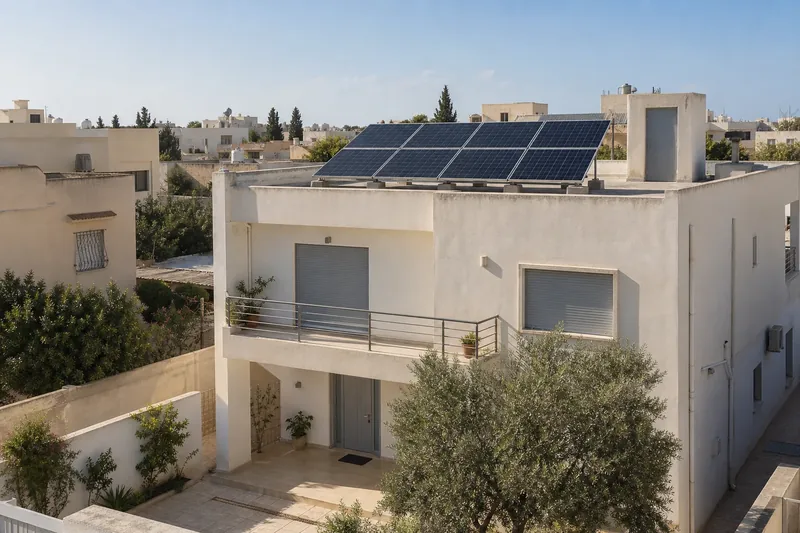
To plan a solar PV installation, first find electricity consumption in kWh and its corresponding period. The total in dinars shows what you owe, but may combine electricity, gas, taxes, instalments and previous balances. It therefore cannot determine solar capacity on its own.
You can start with a clear photo of your bill. The first review has a simple aim: identify useful energy data, verify its period, then add information about your roof and consumption habits.
Information checked on 31 October 2026. The examples below are educational and do not reproduce any customer bill.
Three key pieces of information:
- Electricity kWh are used for system sizing; gas thermies remain separate.
- Check the period and reading type before adding consumption figures.
- A clear photo lets you start your assessment even if you do not understand every bill detail.
Gas, credits and previous balances remain separate. A two-month average cannot describe the entire year.
1. Find the electricity line, then its unit
STEG distinguishes electricity, measured in kilowatt-hours, from gas, expressed in thermies in its tariff information. Do not confuse the two consumptions, even on the same document. Source: STEG, electricity tariffs and consumption units.
kWh measures energy consumed over a period. kW describes power. kWc indicates the solar array’s nominal peak power under reference conditions. These are not interchangeable: consuming 600 kWh does not mean you need 600 kWc.
Start by finding the billed electricity quantity. If several time-of-use periods appear, keep their breakdown rather than just the total. For a business, this split may help the financial assessment.
2. Check the dates covered
An energy quantity only makes sense with its duration. Record consumption start and end dates and the bill type. The issue date or payment deadline does not replace the consumption period.
Fictional example: 600 kWh over two months means an average of 300 kWh per month during that period. It does not prove that each of the twelve months uses 300 kWh. Air conditioning, electric heating, holidays or seasonal activity can significantly change demand.
To reconstruct a year, gather successive periods. Check for overlaps and missing intervals. A consumption history is often easier to use than adding up amounts paid.
3. Distinguish actual readings, estimates and interim bills
A meter-reading bill uses the meter indexes. An estimated bill relies on historical data when a reading could not be taken. An interim bill is an advance taken into account when billing actual readings. Source: STEG, understanding your bill.
For a solar assessment, this distinction avoids counting the same period twice: an advance and its adjustment do not necessarily represent two separate consumptions to add together. Keep documents in chronological order and flag estimates.
If you have more recent meter indexes, STEG offers a self-reading service that can, under its stated conditions, replace an estimated or interim bill with one based on actual consumption. Follow official instructions and keep the corrected bill. Source: STEG, self-reading.
4. Separate energy from other amounts due
The amount at the bottom of the bill is not just kWh. Before discussing solar savings, distinguish the following categories:
| Information identified | Use in the solar assessment |
|---|---|
| Electricity consumption and period | Prepare energy sizing. |
| Gas consumption | Keep it separate from electricity. |
| Subscribed capacity and connection type | Check the project’s technical framework. |
| Charges, taxes and contributions | Recalculate expenses under applicable rules. |
| Financing instalment | Track it in the budget without converting it into consumption. |
| Previous balance or adjustment | Identify amounts relating to other periods. |
STEG describes fixed charges and contributions in its bill explanations. Their presence means reduced electricity purchases do not automatically eliminate every amount due. Source: STEG, billing section.
Add your bill, then your name, phone number and email address so the team can contact you. The assessment carries no obligation.
5. Ideally, prepare twelve months and your operating hours
One bill is enough to start the discussion. For sizing, twelve months reveal variations and high-consumption periods. Add planned changes: a new air conditioner, extension, extra machines or different hours.
For a factory or shop, also state opening hours, working weekends and seasonal closures. Two businesses with the same annual consumption may use different shares of their solar generation if one works mainly by day and the other at night.
The bill shows consumption. Roof conditions, shading, connection and usage patterns then complete sizing. Read our solar PV capacity guide to understand these steps.
6. Photograph the bill without copying everything out
Lay the document flat under even lighting and include the entire page. Units, dates, consumption lines and totals must remain readable. Avoid reflections and check sharpness before sending the file.
In the solar assessment, review automatically read values: electricity, kWh, period and reading type. Correct any misread digit before continuing. If a field is missing or unclear, leave it unknown and ask the team for help.
Do not publish your bill in a public space: it contains subscription and address details. Send only the documents needed to process your request through the designated process.
Move from your bill to your assessment
The initial review matches your consumption with your site’s solar potential. It prepares an assessment covering proposed capacity, estimated generation, budget and financing options to verify.